Calorie counting
Portion Control Guide: Measure Food Without Obsessing
The plate method, hand portions, and a kitchen scale are different tools for different moments.
Key takeaways
- The plate method is a visual guide, not a rigid rule.
- Your hand helps estimate portions when a scale is unavailable.
- Temporarily weighing dense foods builds portion awareness quickly.
What is an appropriate portion?
An appropriate portion is an amount that fits your hunger, goal, and needs. It does not always match the serving on a label. Labels use a standard amount for nutrition information; you may eat more or less and adjust the calculation.
The plate method
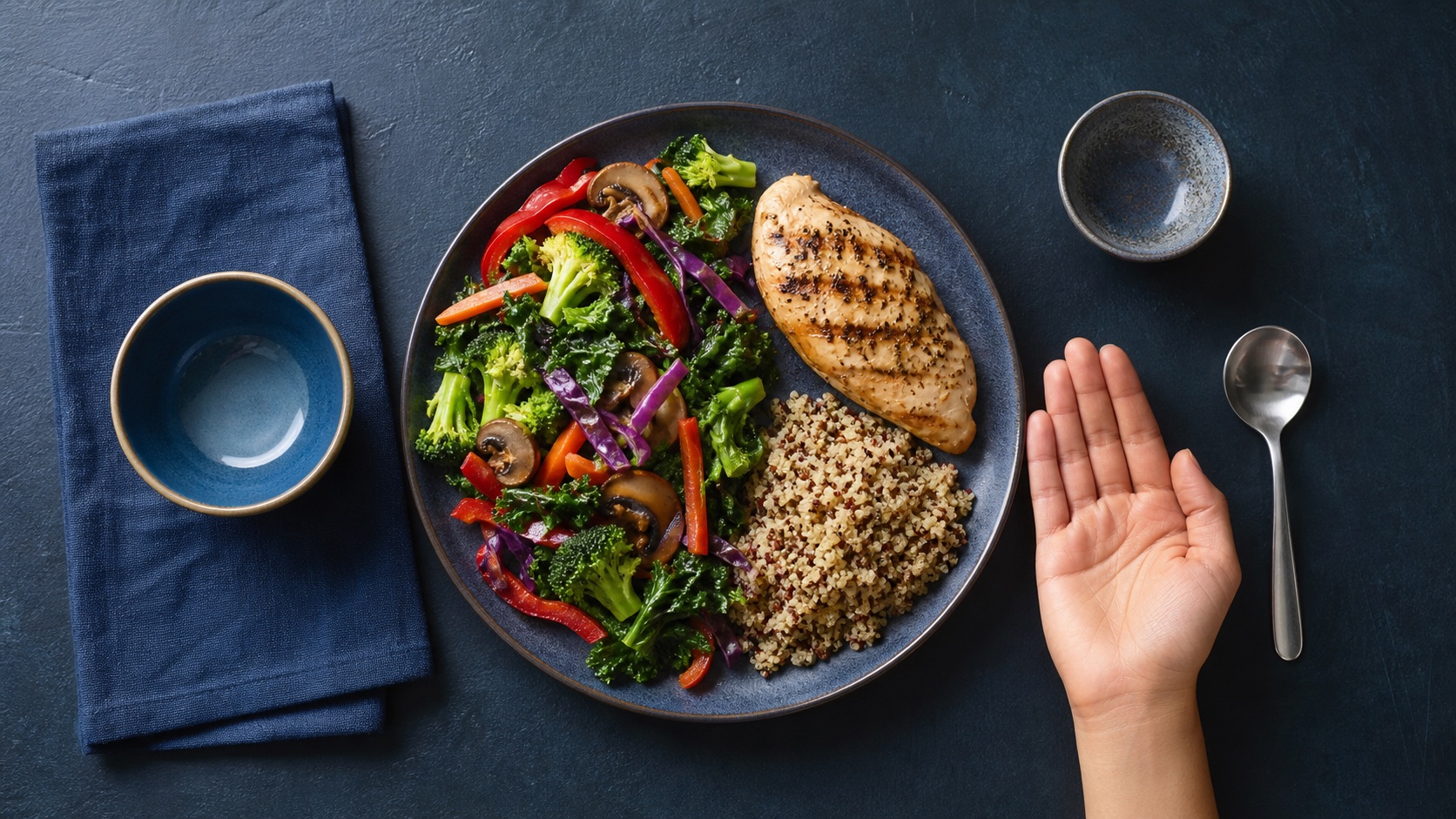
As a starting point, fill half the plate with non-starchy vegetables, one quarter with protein, and one quarter with rice, pasta, potato, tortilla, or another carbohydrate. Add a moderate amount of fat or sauce and an unsweetened drink.
Every meal does not have to look this way. Breakfasts, soups, bowls, and cultural dishes can contain the same components mixed together.
Estimate with your hand
- Palm: a reference for meat, fish, tofu, or chicken.
- Fist: a reference for fruit, cooked rice, pasta, or potato.
- Cupped hand: cereal, granola, or dry snacks.
- Thumb: cheese, nut butter, or dense dressings.
- Two open hands: leafy vegetables or salad.
When a scale is useful
A scale is useful for learning servings of oil, cheese, nuts, cereal, rice, and pasta. It also helps divide recipes. Weigh the full cooked recipe, divide it by the servings you made, and log one fraction.
You do not need to weigh lettuce leaf by leaf or bring a scale to restaurants. Accuracy should serve you, not run your day. Review how to count calories to choose a useful level of detail.
Portions at restaurants
Look at the protein, side, oils, and sauces. Ask for sauce separately, share, take part home, or simply log an estimate and continue. One imprecise meal does not undo a consistent trend.
Frequently asked questions
What is the correct plate size?
There is no universal diameter. A moderate plate can support the visual guide, but the amount depends on the person and the food.
Is it better to weigh food raw or cooked?
Either works when the database entry matches. Do not combine cooked weight with nutrition data for raw food.
Can measuring portions become obsessive?
For some people, yes. If it increases anxiety or rigidity, use visual methods and seek support, especially with an eating-disorder history.
Official sources for further reading

Responsible editorial review
Content created by Dr. Hugo Daniel Parrales López, physician and Kcalories developer. It is educational and does not replace an individual assessment.
Free · Web + iPhone
Turn what you learned into a routine
Create your free account, set your target, and log your first meal in Kcalories.